
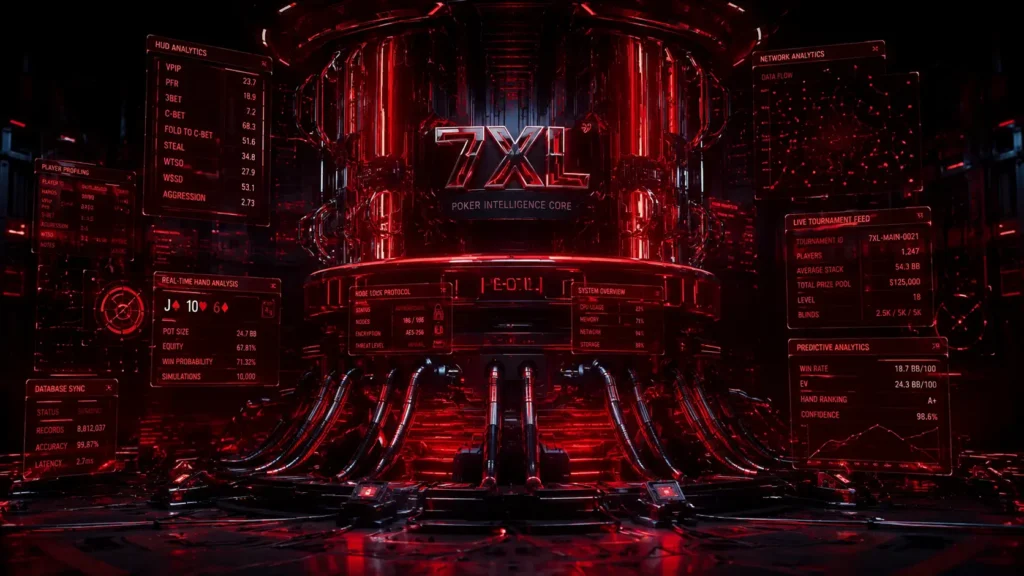
Exploitative Heuristics: Deep-Data Network Analysis and ROI Maximization on 7XL
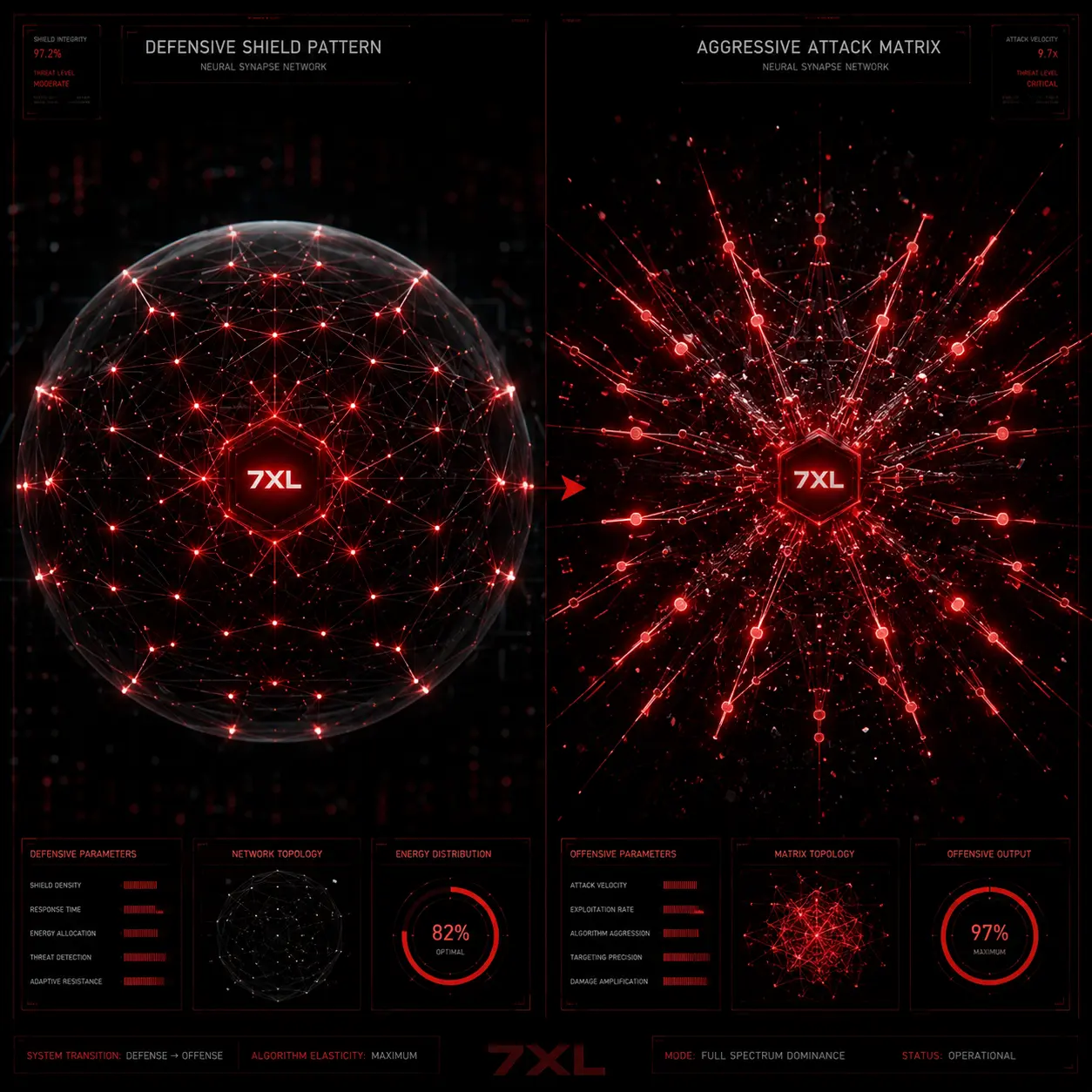
In the Tier-1 computational battlefield of the 7XL VIP poker ecosystem, Game Theory Optimal (GTO) play is merely the baseline defense mechanism. It is the armor that prevents elite operators from bleeding capital. However, true algorithmic dominance and exponential ROI are not generated by playing perfectly balanced, static ranges. Massive profit is extracted through Exploitative Heuristics. This requires a systemic transition from a defensive GTO posture to an aggressive, data-driven exploitation model. By leveraging deep-data network analysis and real-time HUD telemetry, Alpha-Architects identify structural leaks in Level-0 nodes and violently deviate from baseline frequencies to maximize Expected Value (EV). This manifesto dissects the exact data parameters required to execute maximum exploitative protocols without compromising your own structural integrity.
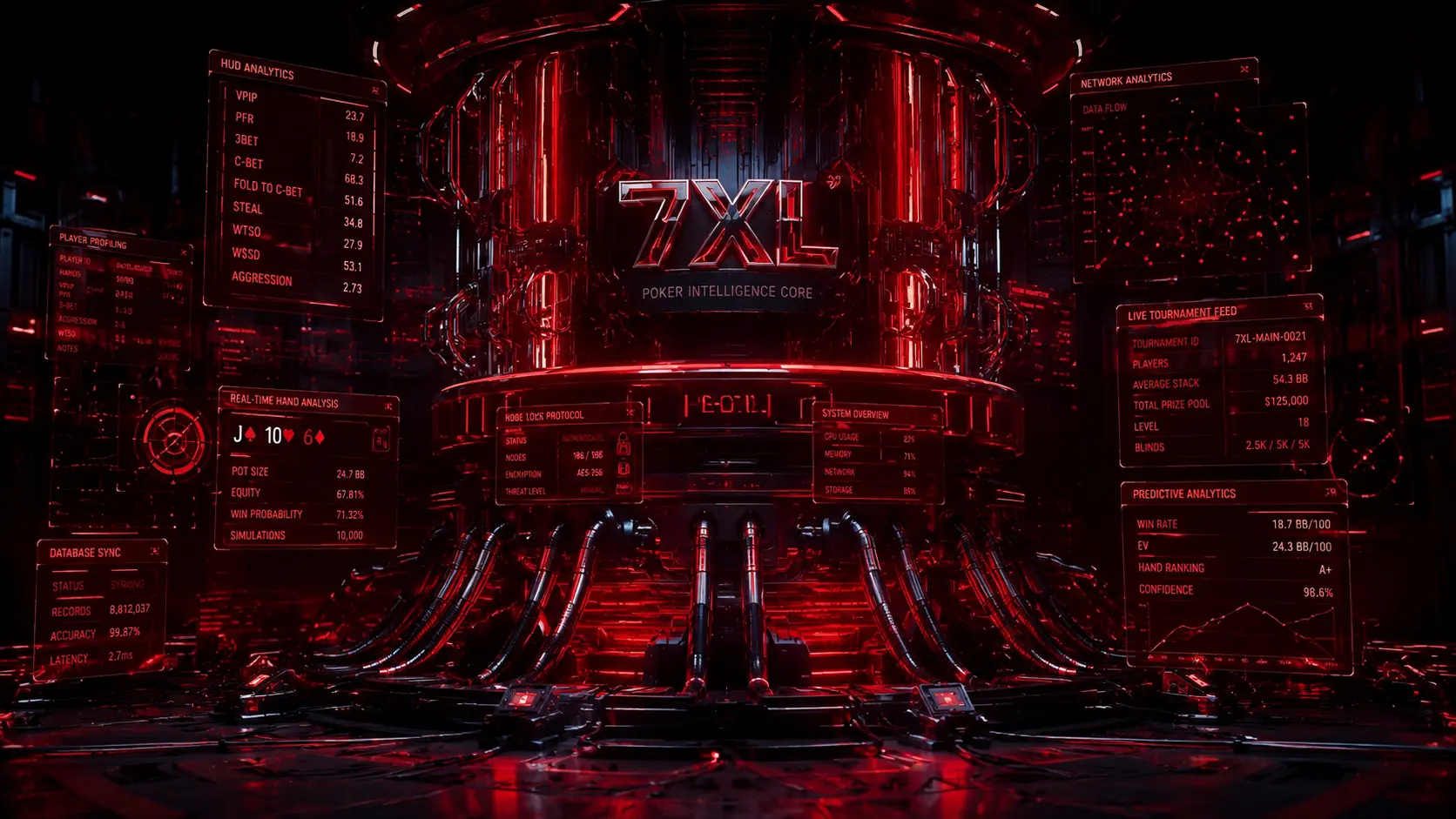
Phase 1: The “Whys” – The Mathematics of Maximum Exploitative Play (MEP)
Why should an elite operator consciously choose to deviate from a mathematically unexploitable GTO strategy? The answer lies in the fundamental physics of poker economics: GTO guarantees you will not lose to a superior player, but it simultaneously leaves massive amounts of capital on the table against an inferior, unbalanced opponent. When a Level-0 player at the 7XL tables systematically over-folds to 3-bets pre-flop, or severely under-bluffs the river, continuing to execute a perfectly balanced GTO strategy against them is a critical mathematical error. You are essentially refusing to accept the kinetic capital they are freely donating to the ecosystem.
Maximum Exploitative Play (MEP) is the science of identifying a structural anomaly in your opponent’s data and adjusting your own frequencies to completely isolate and crush that specific weakness. If your HUD telemetry confirms an opponent folds to continuation bets (C-bets) at a 75% frequency on dry board textures, your algorithmic response must be to C-bet 100% of your range, regardless of your actual equity. The Expected Value (EV) generated by their unbalanced fold frequency completely overrides the raw mathematical equity of your cards. However, this transition requires deep-data validation. If you attempt to execute an exploit based on a micro-sample size (e.g., 50 or 100 hands), you are not analyzing data; you are hallucinating patterns in standard statistical noise. The “Why” of exploitation is pure extraction, but it demands an uncompromising, institutional-grade data architecture to validate the anomaly before execution.
Phase 2: The “How-Tos” – Deploying the Node-Locking Algorithm
How do you safely transition from GTO mechanics to aggressive heuristic exploitation without exposing your own liquidity pool to counter-attacks? The execution relies on a process known in solver software as “Node-Locking.” In the live environment of the 7XL tables, you must become the real-time solver. First, you must configure your Smart HUD to track specialized, highly specific granular data points. Standard metrics like VPIP and PFR are useless for Tier-1 exploitation. You must track deep-node metrics: “Fold to Check-Raise on Turn,” “River Call Efficiency,” and “WWSF” (Won When Saw Flop). These metrics expose the opponent’s true psychological and structural breaking points.
Once a systemic leak is isolated and validated by a massive sample size (minimum 5,000 hands for post-flop specific actions), you deploy the counter-strategy. If the data dictates the villain over-bluffs missed draws on the river, your algorithm must instantly expand its calling range with marginal bluff-catchers, completely ignoring the standard GTO folding frequencies. But here is the critical survival protocol: The moment you deviate from GTO to exploit a node, your own strategy becomes inherently unbalanced. You become exploitable. Therefore, a Tier-1 operator never locks into a static exploit. You must simultaneously run a secondary diagnostic loop to monitor the villain’s adjustment time. The exact microsecond the opponent realizes they are being exploited and shifts their frequency, you must instantly snap back to your unexploitable GTO baseline. This elastic transition—from defense, to maximum extraction, and back to defense—is the ultimate signature of algorithmic supremacy on the 7XL network.

Phase 3: Pro Tips – Advanced Exploit Vulnerabilities
Executing deviations requires absolute systemic control. Decode these parameters before shifting your ranges:
- 1. The Counter-Exploit Trap: When you drastically shift your 3-bet frequency to exploit a folder, at what exact hand threshold does a Tier-1 regular begin exploiting your new unbalance?
- 2. Hallucinatory Data: A river fold stat based on 3,000 total hands only has 10 actual river instances. Do you understand the catastrophic variance of acting on this micro-data?
- 3. The Red Line Truth: Maximum Exploitative Play aggressively spikes your non-showdown winnings. If your red line is crashing, what systemic leak are you hiding from yourself?
- 4. Elasticity Failure: Once you node-lock an exploit, how many algorithmic cycles does it take for you to recognize the villain has already adjusted?
- 5. Baseline Contamination: Playing purely exploitative poker against weak nodes eventually degrades your GTO baseline. How do you compartmentalize your execution logic?
- 6. The Isolation Protocol: Can your HUD configuration instantly differentiate between a Level-0 random anomaly and a deliberate, high-level leveling war initiated by a shark?
Extract Maximum ROI on 7XL
GTO is for survival; exploitation is for dominance. Bring your data architecture to the most lucrative high-stakes tables on the planet. Initialize your secure VIP node today.
REGIONAL GATEWAYS: TIER-1 ACCESS NODES
- ▶ UAE High-Stakes Gateway
- ▶ Brazil Institutional Liquidity
- ▶ Pakistan VIP Poker Infrastructure
- ▶ Turkey Crypto Poker Node
- ▶ Israel Tier-1 Access Protocol
- ▶ Global Ecosystem Gateway
TACTICAL INTEL & ADJACENT NODES
Return to Core Command: 7XL Poker Architecture & Core Systems
- ▶ Active Payload: Architecture of Decision (EV vs. Emotional Bloat)
- ▶ Active Payload: ICM Poker Strategy on 7XL Final Tables
- ▶ Active Payload: Standard Deviation & Bankroll Volatility
- ▶ Current Node: Exploitative Heuristics & Network Analysis
- ▶ Next Node: Dynamic HUD Configurations & Tier-1 Telemetry