
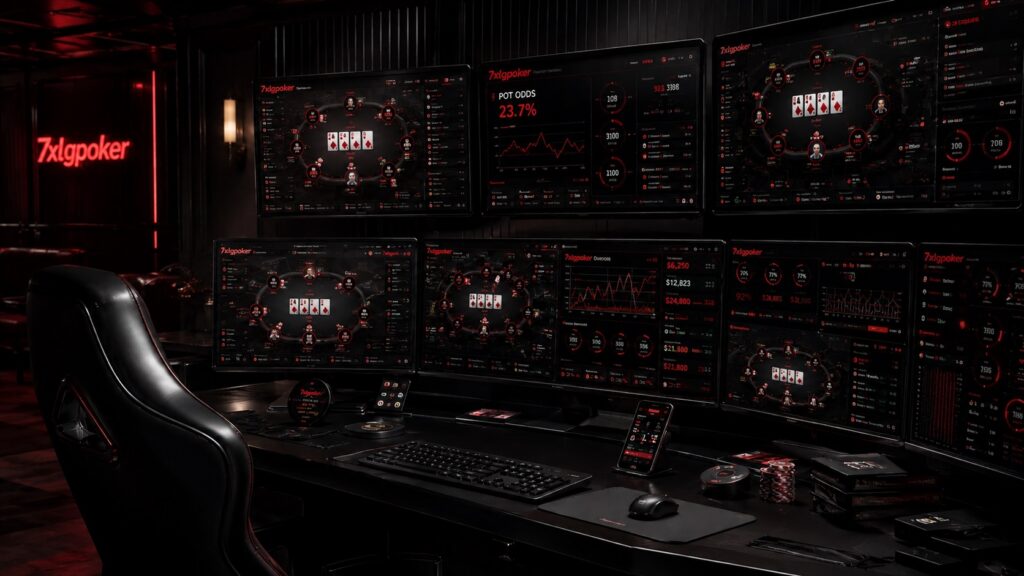
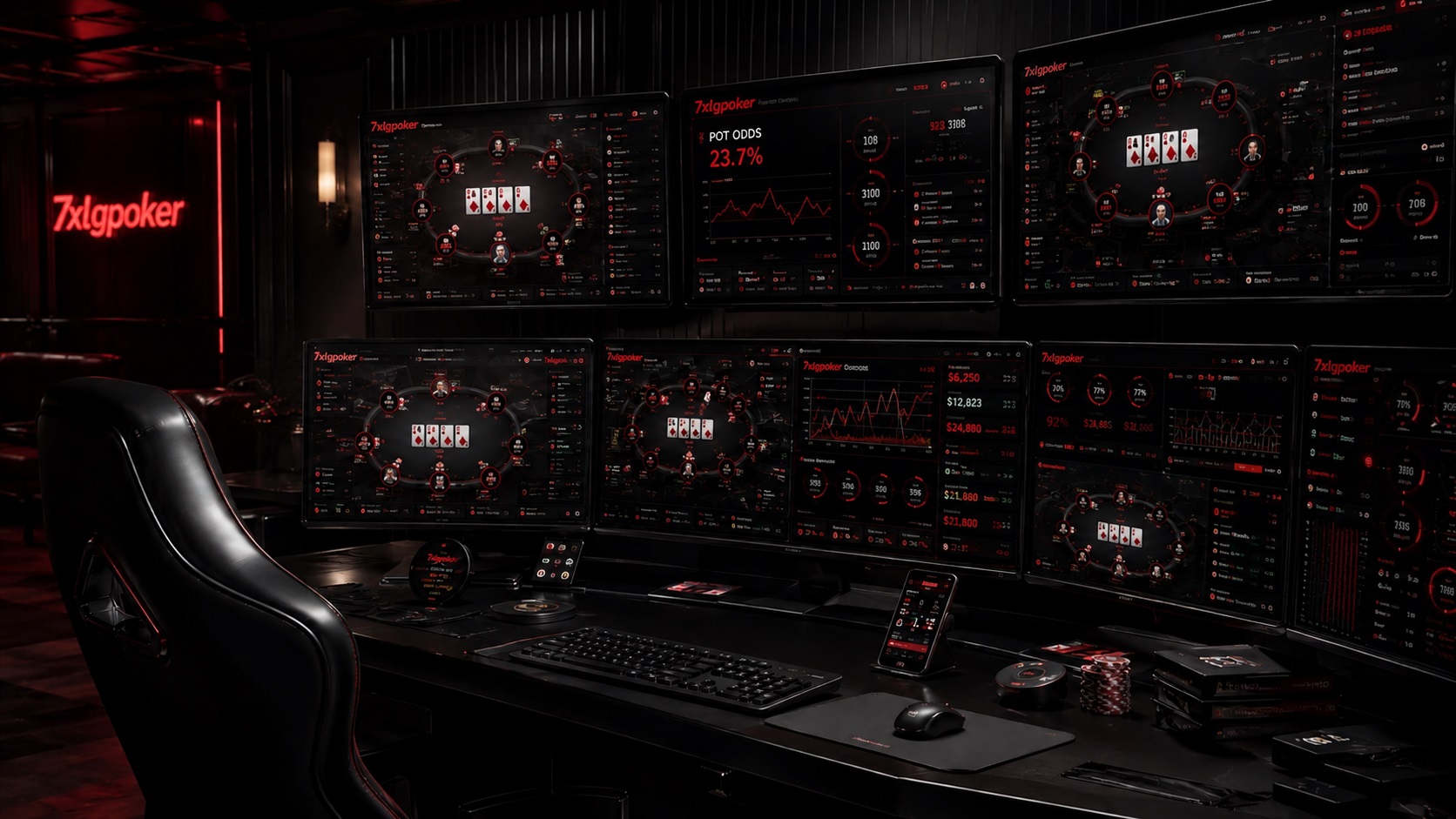
In the modern ecosystem of iGaming, specifically within high-liquidity networks like 7XL Poker and GGPoker, the traditional “grind” methodology is obsolete. Survival and profitability at the tables are no longer dictated merely by intuition or basic hand-reading capabilities. In 2026, dominating the 7XL grid requires a systemic, quantitative approach to the most critical, yet frequently overlooked, variable in poker: Algorithmic Table Selection.
This architectural blueprint dismantles the mathematics of Expected Value (EV) maximization through strategic table routing, ensuring your bankroll is deployed only in environments with the highest mathematical edge.
1. The Mathematics of Asymmetrical Lobbies

The fundamental flaw of the amateur player is executing random seating protocols. They log into the 7XL client and click “Join” on the first available seat. From a systemic standpoint, this is equivalent to deploying capital into a highly volatile market without reading the order book.
Table selection is an exercise in identifying Asymmetrical Lobbies—environments where the concentration of recreational capital (dead money) mathematically outweighs the concentration of professional extraction (reg density). On 7XL, identifying these lobbies requires parsing specific quantitative metrics:
- ► VPIP/PFR Divergence: A table with an average VPIP (Voluntarily Put in Pot) exceeding 35%, combined with a PFR (Preflop Raise) below 15%, indicates a passive-calling infrastructure. This is a high-yield node.
- ► Average Pot Multiplier: Tracking the average pot size relative to the Big Blind (BB). Consistently inflated pots without corresponding 3-bet frequencies signal an environment ripe for exploitative value betting.
2. Exploiting 7XL’s Smart HUD Architecture
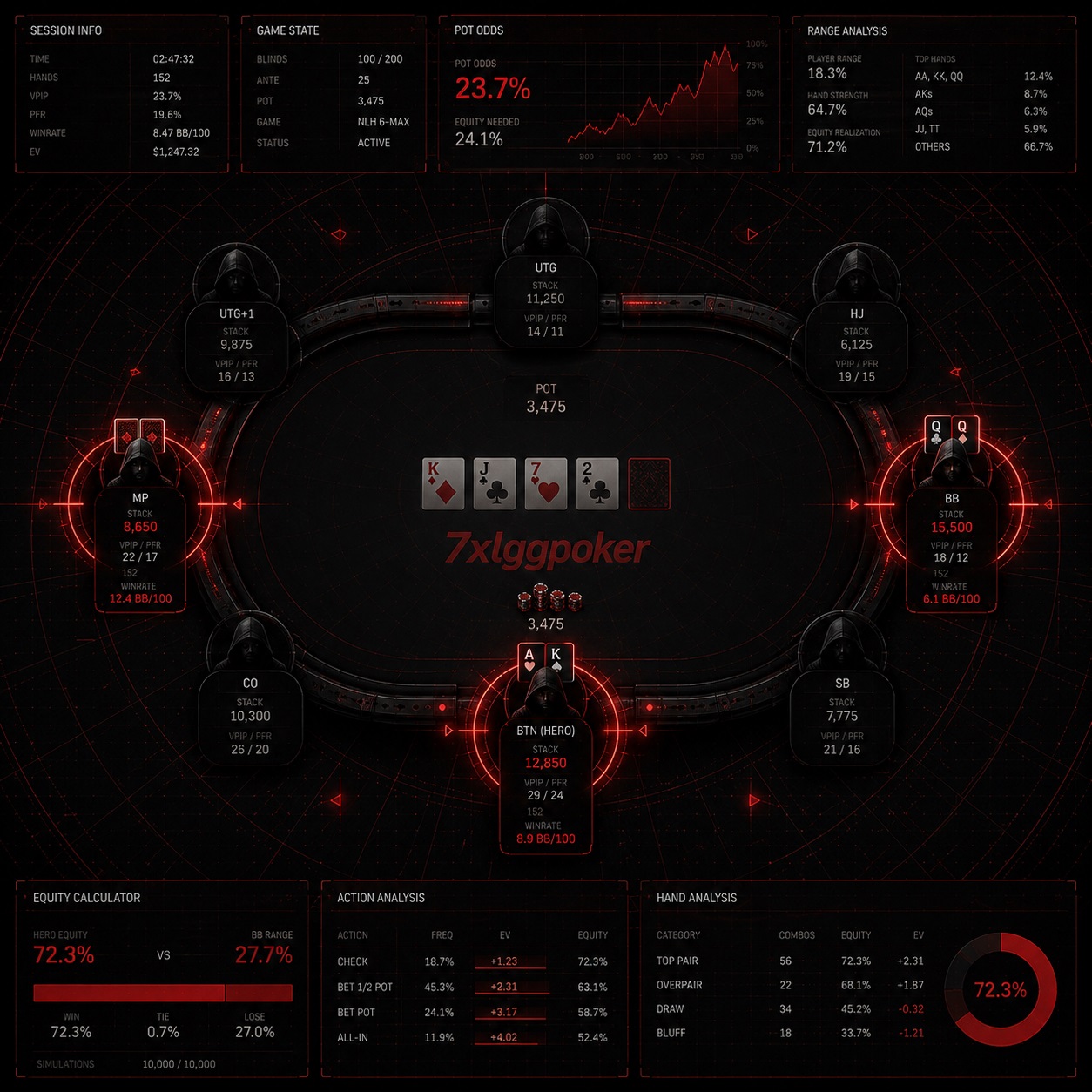
7XL provides a built-in Smart HUD, eliminating the need for third-party trackers while maintaining a level playing field. However, interpreting this data requires a structural methodology.
You must treat the Smart HUD as a real-time data terminal. Do not look at individual stats in a vacuum; look for Data Clusters. A player displaying a “Whale” icon combined with a VPIP of 60%+ is not just a target; they are the gravitational center of the table. Your strategic positioning must be architected to gain absolute positional advantage (acting immediately after them) to isolate their capital before other regulars can intercept the transaction.
3. The Variance Mitigation Protocol
High-stakes environments are inherently chaotic. Selecting the right table acts as a structural shock absorber against variance. By consistently routing your sessions to tables with a mathematically verified edge, you reduce the standard deviation of your win rate.
- ► The Seat-Change Dynamic: If a high-value target leaves the table and the lobby standardizes into a GTO-heavy environment, remaining at the table is a negative-EV decision. You must execute an immediate extraction protocol. Close the node, rescan the lobby, and deploy your capital to a new asymmetrical table.
Conclusion: The Systematic Grinder
Poker on the 7XL network is a war of algorithms and emotional control. By abandoning random seating and adopting a rigorous, quantitative framework for table selection, you cease to be a gambler and become an architect of your own win rate. Deploy your capital systematically, monitor the metrics, and exploit the inefficiencies of the human element.
Conquer the 7XL Tournament Grid
Register for the biggest guaranteed prize pools in online poker history. Seamless Crypto (USDT) integration and instant VIP network.