


Beginner Poker Tips are essential for anyone starting out in the game. In this guide, we’ll explore 10 critical tips that will help you get started.”
Introduction: Why Poker is So Popular and How to Get Started
Poker has become one of the most popular card games worldwide, attracting millions of players to both online platforms and brick-and-mortar casinos. But what makes poker so exciting and widely loved? In this article, we’ll take a look at the reasons behind its popularity and provide a guide for beginners on how to get started with poker.
1. The Thrill of Strategy and Skill
One of the main reasons poker is so popular is the balance of luck and skill. Unlike many casino games, poker is not just about the cards you’re dealt. It’s about how well you use those cards and your ability to read your opponents. As you gain experience, you learn to make smarter decisions and craft strategies that give you an edge. This mental aspect of the game adds to its allure and keeps players coming back for more.
2. The Social Aspect
Poker is a social game. Whether you’re playing with friends at home, participating in a live casino game, or engaging in an online tournament, poker offers a unique opportunity to interact with others. The conversations, camaraderie, and sometimes even the friendly banter between players make poker a fun and engaging experience. It’s a game where you can meet new people and build connections while having a great time.
3. Multiple Variants to Explore
Another reason for poker’s popularity is the variety of game formats available. Whether you prefer Texas Hold’em, Omaha, Seven-Card Stud, or other variations, there is always something new to try. Beginners often start with Texas Hold’em due to its widespread availability and ease of understanding, but once you’re comfortable with the basics, you can explore different versions to challenge yourself and keep the game exciting.
4. It’s Easy to Learn, But Hard to Master
Poker is a game that can be learned quickly, but mastering it takes years of practice. For beginners, understanding the basic rules and hand rankings is simple. However, as you advance, the game becomes more complex, and the need for strategic thinking, psychological insight, and adaptability grows. The challenge of improving your skills and competing against others at higher levels is part of what makes poker so addictive and rewarding.
5. How to Get Started with Poker
For anyone new to poker, the first step is learning the basic rules. Start by familiarizing yourself with the card rankings, different types of hands, and how betting rounds work. Many online platforms offer free poker games where you can practice without any financial risk. Once you’re comfortable with the basics, you can begin playing for real money and participating in tournaments.
Before you dive into a game, it’s important to manage your expectations and bankroll. Set a budget for yourself, and don’t be afraid to start with lower stakes games. With time, patience, and practice, you’ll become a more skilled player.
In the next sections, we will delve deeper into the fundamental tips and strategies you need to succeed at poker. From understanding hand rankings to managing your bankroll, we’ve got you covered!
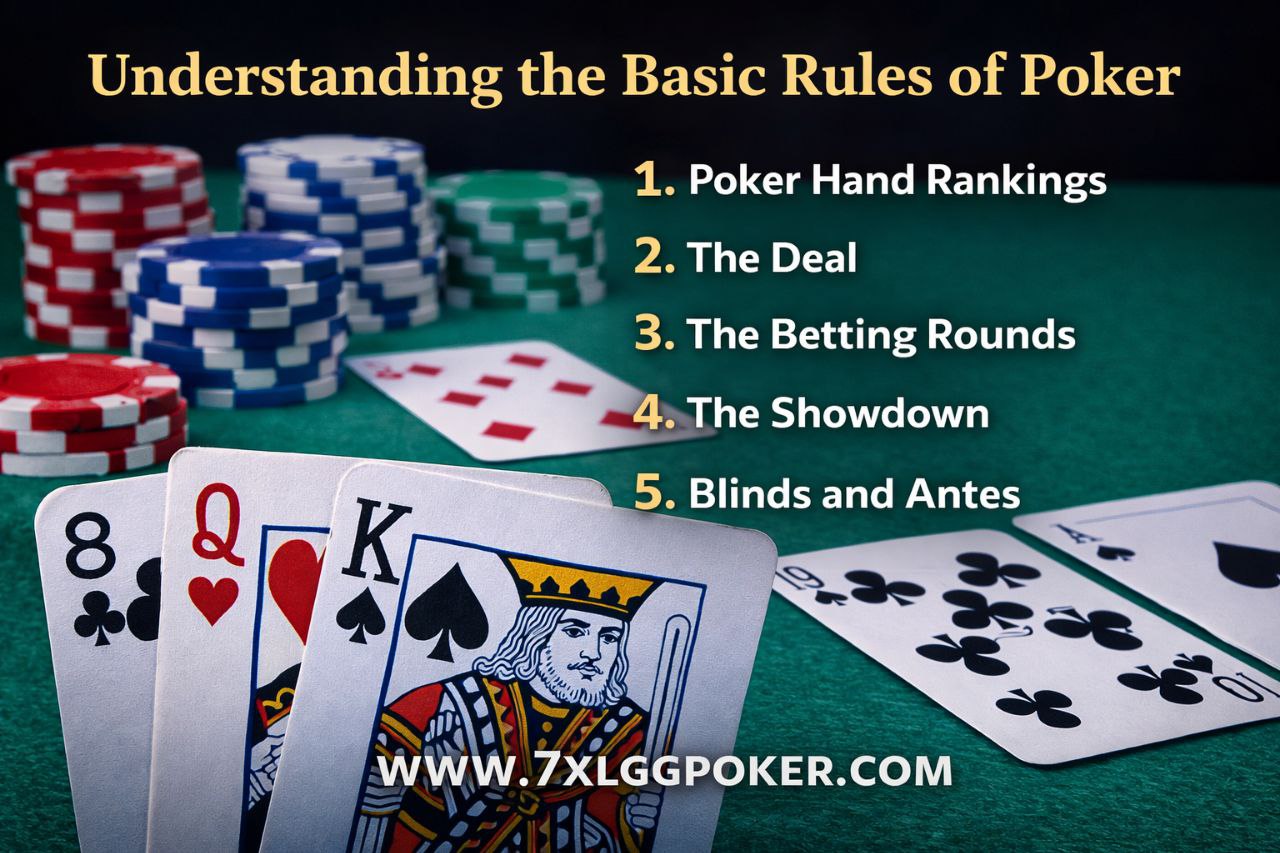
Understanding the Basic Rules of Poker
Poker is a card game that involves skill, strategy, and psychology. Understanding the basic rules of poker is essential for beginners who want to play and enjoy the game. In this section, we will break down the fundamental rules that every player needs to know before sitting down at a poker table.
1. The Poker Hand Rankings
One of the first things every player must understand is the hand rankings. In poker, the goal is to form the best possible hand using the cards you are dealt. The hand rankings are as follows (from highest to lowest):
- Royal Flush: A, K, Q, J, 10 of the same suit
- Straight Flush: Five consecutive cards of the same suit
- Four of a Kind: Four cards of the same rank
- Full House: Three of a kind + a pair
- Flush: Five cards of the same suit (not in sequence)
- Straight: Five consecutive cards of any suit
- Three of a Kind: Three cards of the same rank
- Two Pair: Two sets of pairs
- One Pair: Two cards of the same rank
- High Card: The highest card when no other hand is made
It is important to familiarize yourself with these hand rankings, as they will help you understand which hands win during the game.
2. The Deal
In most versions of poker, players are dealt two cards (known as “hole cards”) that are kept hidden from other players. Depending on the game, five community cards may then be dealt face-up on the table. The goal is to make the best possible five-card hand using a combination of your hole cards and the community cards.
3. The Betting Rounds
In poker, betting occurs in rounds. After the initial deal, players have the option to bet, check, raise, or fold. The round ends when all players have either called (matched) the current bet or folded (disconnected from the hand).
The betting rounds typically proceed as follows:
- Preflop: Players receive their hole cards, and the first round of betting takes place.
- Flop: Three community cards are dealt face-up, followed by another round of betting.
- Turn: A fourth community card is dealt, followed by another round of betting.
- River: The fifth and final community card is dealt, followed by the final round of betting.
4. The Showdown
If there are two or more players remaining after the final betting round, there is a showdown. Players reveal their hands, and the player with the best hand wins the pot. If two players have the same hand, the pot is split between them.
5. Blinds and Antes
In some forms of poker, such as Texas Hold’em, players are required to make forced bets known as blinds before the cards are dealt. There are typically two blinds: the small blind and the big blind. These blinds help create action and ensure that there is always money in the pot to play for.
In other variations, such as Seven-Card Stud, players may be required to pay an ante, which is a small forced bet made before the hand begins.
Now that you understand the basic rules of poker, you can begin practicing and playing. As you gain more experience, you’ll learn how to use strategy, psychology, and observation to increase your chances of winning. In the next section, we’ll discuss the importance of bankroll management in poker.

The Importance of Bankroll Management
One of the most crucial aspects of becoming a successful poker player is managing your bankroll effectively. No matter how skilled you are, if you don’t have a proper strategy for managing your money, you risk going broke quickly. In this section, we’ll explain what bankroll management is, why it’s important, and how to implement it in your poker game.
1. What is Bankroll Management?
Bankroll management refers to the practice of managing the money you set aside for playing poker. It’s essential that you only use money that you can afford to lose and never gamble with money you need for your daily living expenses. This ensures that you can play poker without the stress of worrying about financial instability.
2. The Basic Principle of Bankroll Management
The primary principle of bankroll management is to play at stakes that are within your bankroll’s limit. If you’re playing at stakes that are too high for your bankroll, you risk going broke quickly, especially if you’re experiencing a losing streak. The general rule is to have at least 20-30 buy-ins for the game you’re playing.
- For cash games: You should have 20-30 buy-ins for the level you’re playing. For example, if you’re playing $1/$2 cash games, your bankroll should be at least $2,000 – $3,000.
- For tournament play: Tournaments usually require a larger bankroll since you’re risking your buy-in over a longer period. A common recommendation is to have 50-100 buy-ins for the type of tournament you’re entering.
3. Protecting Yourself from Variance
In poker, variance is inevitable. No matter how good your strategy is, you will experience both winning and losing streaks. Bankroll management helps protect you during the downswings. By having a sufficient bankroll, you ensure that you can keep playing through the tough times without going broke.
4. How to Implement Bankroll Management
Here are a few tips on how to effectively implement bankroll management in your poker game:
- Set a budget: Decide in advance how much money you are willing to risk and stick to it.
- Choose the right stakes: Play at stakes that are appropriate for your bankroll, and avoid chasing losses by moving to higher stakes when you’re on a losing streak.
- Track your results: Keep track of your wins and losses to get a better understanding of your poker performance and adjust accordingly.
- Be disciplined: Avoid going on tilt, and never play when you’re upset or emotionally compromised, as this can lead to poor decision-making and reckless bets.
5. The Long-Term Benefits of Bankroll Management
By practicing proper bankroll management, you’ll be able to play poker with a clear mind and without the stress of financial pressure. It allows you to play for the long term and gives you the best chance of success. Good bankroll management helps you stay in the game through both good and bad times, leading to a more consistent and enjoyable poker experience.
In the next section, we will discuss some of the most important poker strategies to help you increase your odds of winning.

Top 3 Beginner Poker Tips to Master the Game
Betting is one of the most important aspects of poker. How you bet, when you bet, and how much you bet can significantly impact your chances of winning. In this section, we’ll share three essential betting tips that will help you bet like a pro and improve your overall poker strategy.
1. Know When to Bet and When to Fold
One of the most valuable skills in poker is knowing when to bet and, just as importantly, when to fold. Professional players know how to assess their hand and the situation at the table to determine whether it’s worth betting. They understand that sometimes folding is the best decision, even if they’ve invested a lot of chips in the hand.
As a beginner, it’s crucial to be patient and not feel compelled to bet every hand. If you have a weak hand, folding early can save you from losing more chips. Conversely, when you have a strong hand, it’s important to bet aggressively to build the pot and force opponents to make tough decisions.
2. Don’t Be Afraid to Bluff, but Do It Wisely
Bluffing is a key element of poker strategy, but it’s important to use it sparingly and strategically. A successful bluff can confuse your opponents and force them to fold even when they have better hands. However, bluffing too frequently or in the wrong situations can make you predictable and lead to losses.
When bluffing, try to read your opponents’ behavior. Are they playing cautiously? Do they seem confident? If you think they have a weak hand, you might want to make a well-timed bluff. Always keep in mind that your bluff should match your betting patterns, so you don’t give away too much information to your opponents.
3. Understand Pot Odds and Expected Value
To bet like a pro, you need to understand the concept of pot odds and expected value. Pot odds are the ratio between the current size of the pot and the cost of a contemplated call. This concept helps you determine whether it’s worth calling a bet based on your odds of completing a hand. If the potential reward outweighs the cost of the call, it’s often worth going for it.
Expected value (EV) is a calculation that helps you assess whether a bet or decision will be profitable in the long run. Professional players use EV to make more informed decisions, as it allows them to evaluate their actions based on their potential return rather than just short-term gains.
Incorporating These Tips Into Your Play
These three tips – knowing when to bet and fold, bluffing wisely, and understanding pot odds and expected value – are essential for any poker player who wants to bet like a professional. By practicing these strategies, you’ll improve your decision-making and become a more skilled poker player.
As you gain more experience, you’ll develop your own betting style. The key is to stay patient, remain disciplined, and continue learning from both your successes and your mistakes. In the next section, we’ll discuss how to bluff successfully in poker and use psychology to gain an edge over your opponents.

How to Bluff Successfully in Poker
Bluffing is one of the most exciting and rewarding aspects of poker, but it can also be one of the most difficult to master. A successful bluff can win you a pot without having the best hand, but a failed bluff can cost you a significant portion of your bankroll. In this section, we will explore how to bluff effectively in poker and some strategies that will improve your chances of pulling off a successful bluff.
1. Choose the Right Moment to Bluff
One of the key factors in bluffing successfully is timing. Bluffing at the wrong time can easily backfire. The best moments to bluff are when your opponents are likely to have weak hands, or when they are in a position where they are unsure about their own hand.
Typically, bluffing works best in the later betting rounds when there are fewer players left in the hand, and the pot has grown larger. Additionally, bluffing is more effective when there are community cards on the table that could make strong hands, but your opponents have missed them.
2. Observe Your Opponents
To bluff successfully, you must be able to read your opponents and understand their behavior. Look for signs of weakness in their betting patterns. For example, if a player has been playing conservatively and suddenly makes a large bet, they may be trying to scare you off with a weak hand.
Pay attention to their body language and facial expressions if you’re playing live poker. However, be cautious, as skilled players can use reverse psychology to deceive you. It’s essential to stay aware of their actions, and don’t fall for patterns that seem too obvious.
3. Make Your Bluff Believable
To make a bluff successful, it’s essential to make your actions believable. A good bluff is one that fits with the story you’re telling through your betting. For example, if you’ve been betting aggressively throughout the hand, your opponents are more likely to believe you have a strong hand if you make a big bet on the river.
Consider the cards on the table and the strength of the hand you’re trying to represent. Your bet should align with the potential strength of the hand you want your opponents to believe you have. For example, if you’re trying to represent a flush, your bet should be consistent with how you would bet if you actually had a flush.
4. Control Your Emotions
When bluffing, it’s important to stay calm and composed. If you show signs of nervousness or anxiety, your opponents may pick up on them and realize you are bluffing. Professional poker players are experts at maintaining a “poker face,” meaning they hide their emotions and reactions to the cards they hold.
If you are playing online poker, keep your behavior consistent. The way you bet and the timing of your actions can all give away information about the strength of your hand. Don’t let emotions dictate your actions, and try to maintain a steady and confident betting rhythm.
5. Don’t Bluff Too Often
While bluffing is a powerful tool, it can also be dangerous if overused. Bluffing too frequently will make you predictable, and experienced players will catch on quickly. Use bluffing selectively and make sure that it fits with your overall strategy.
Sometimes, it’s better to fold a weak hand and wait for a stronger opportunity to bluff. Over-bluffing can lead to significant losses and put you at a disadvantage against skilled players.
Bluffing is a skill that requires practice and experience to master. The more you play and observe, the better you’ll become at reading situations and opponents, and the more successful your bluffs will be. In the next section, we’ll dive into one of the most critical aspects of poker: understanding pot odds and expected value.

Conclusion: Building Confidence and Improving Your Poker Skills
As you progress in your poker journey, one of the most important things to focus on is building your confidence and continually improving your skills. Poker is not just a game of chance; it’s a game of strategy, patience, and psychology. By applying the tips and strategies discussed in this article, you will be well on your way to becoming a more skilled and confident poker player.
1. Practice Makes Perfect
The more you play, the better you will get. Just like any other skill, poker requires practice and experience to master. Whether you play with friends, participate in online games, or enter live tournaments, consistent practice will help you learn the nuances of the game and develop your own unique strategy.
Start with lower stakes games, where you can gain experience without risking too much of your bankroll. As you get more comfortable and confident, you can gradually increase the stakes and challenge yourself with more difficult opponents.
2. Learn from Your Mistakes
One of the best ways to improve in poker is to learn from your mistakes. After every session, take some time to reflect on the hands you played and the decisions you made. Did you bluff too often? Did you fold when you should have raised? By analyzing your play, you’ll begin to understand where you went wrong and what you could have done better.
Don’t be discouraged by losses. Every player, no matter how experienced, goes through ups and downs. The key is to learn from those experiences and use them to improve your strategy going forward.
3. Stay Calm and Focused
One of the biggest obstacles in poker is staying calm under pressure. In high-stakes situations or when facing tough opponents, it’s easy to get flustered and make poor decisions. However, maintaining a calm and focused mindset is essential for making smart plays and staying in control of your game.
To build confidence, practice staying calm and focused, even during difficult hands. The more you practice this, the easier it will become to make the right decisions, no matter how tense the situation may be.
4. Stay Up-to-Date and Keep Learning
Poker is an evolving game, and staying up-to-date with the latest trends, strategies, and theories is crucial for continued success. Read poker books, watch tutorials, and engage in discussions with other players to expand your knowledge and refine your skills.
Many professional players continually study the game, analyze their performance, and adjust their strategies accordingly. By maintaining a growth mindset and staying committed to learning, you’ll be able to constantly improve and stay ahead of the competition.
5. Set Realistic Goals
Setting clear, achievable goals is a great way to stay motivated and measure your progress. Whether it’s improving your win rate, mastering a specific poker variant, or participating in a major tournament, having goals will give you something to strive for and help you stay focused on your growth as a player.
Make sure your goals are realistic and broken down into smaller, manageable steps. By taking it one step at a time, you’ll build confidence and continuously improve as a poker player.
In conclusion, becoming a successful poker player takes time, effort, and dedication. By practicing regularly, learning from your mistakes, staying calm and focused, and continuously improving your skills, you’ll gain the confidence you need to succeed in poker. Remember, the more you play, the better you’ll get!
Frequently Asked Questions (FAQ)
1. Why is poker so popular?
Poker is popular due to its combination of skill and luck. Unlike many other casino games, poker allows players to use strategy, psychological tactics, and reading their opponents to influence the outcome. Its social nature and variety of game formats also contribute to its widespread appeal.
2. How do I get started playing poker?
To get started with poker, the first step is learning the basic rules. You can start by reading articles or watching videos on how to play, and then practice playing free online games. Once you’re familiar with the basics, try playing at low-stakes tables to gain experience before moving on to real-money games.
3. What is bankroll management and why is it important?
Bankroll management refers to managing the money you’ve set aside specifically for playing poker. It’s important to only gamble with money you can afford to lose and avoid using funds for daily expenses. Proper bankroll management ensures that you can continue playing over the long run without going broke during losing streaks.
4. How should I bet like a pro?
To bet like a pro, it’s important to know when to bet, when to fold, and when to raise. Professional players understand the value of being patient and making strategic bets. They also know how to bluff effectively and manage pot odds and expected value in their decision-making process.
5. How does bluffing work in poker?
Bluffing is a key element of poker strategy. It involves pretending to have a stronger hand than you do in order to get your opponents to fold. Successful bluffing requires timing, reading your opponents’ behaviors, and knowing when to represent a strong hand. A well-timed bluff can win you a pot even when you don’t have the best hand.
6. When should I bluff?
The best time to bluff is when you think your opponents have weak hands or when there are community cards on the table that could give you a strong hand. Bluffing works best during the later betting rounds when fewer players are involved and the pot is larger. The key is to choose the right moment and ensure that your actions appear consistent with a strong hand.
7. How can I improve my poker skills?
Improving your poker skills requires consistent practice. Play regularly, analyze your hands, and learn from your mistakes. Focus on understanding poker strategies, hand rankings, and pot odds. Watch tutorials and read books to deepen your knowledge. The more experience you gain, the better your decision-making will become.
8. Should I always use advanced strategies?
Advanced strategies can be very effective, but they are usually best applied once you have mastered the basics. For beginners, it’s important to focus on fundamental strategies first, such as understanding hand rankings, managing your bankroll, and knowing when to bet. As you progress, you can start incorporating more advanced tactics like bluffing and understanding opponent behavior.
9. Is bluffing always effective?
No, bluffing is not always effective. If you bluff too often, your opponents will catch on and start calling your bluffs. Bluffing should be used selectively and in situations where it makes sense. It’s important to make your bluffs believable and avoid becoming predictable.
10. How can I learn from my poker experiences?
After every poker session, take the time to reflect on your decisions. Analyze your wins and losses, and think about what you could have done differently. By learning from your mistakes, you can improve your strategy and avoid making the same errors in future games. Keep track of your performance and adjust your approach as needed.
Beginner Poker Tips Beginner Poker Tips Beginner Poker Tips Beginner Poker Tips Beginner Poker Tips Beginner Poker Tips Beginner Poker Tips Beginner Poker Tips Beginner Poker Tips Beginner Poker Tips Beginner Poker Tips Beginner Poker Tips Beginner Poker Tips Beginner Poker Tips Beginner Poker Tips Beginner Poker Tips Beginner Poker Tips Beginner Poker Tips Beginner Poker Tips Beginner Poker Tips Beginner Poker Tips Beginner Poker Tips Beginner Poker Tips Beginner Poker Tips Beginner Poker Tips Beginner Poker Tips Beginner Poker Tips Beginner Poker Tips Beginner Poker Tips Beginner Poker Tips Beginner Poker Tips Beginner Poker Tips Beginner Poker Tips Beginner Poker Tips Beginner Poker Tips Beginner Poker Tips Beginner Poker Tips Beginner Poker Tips Beginner Poker Tips Beginner Poker Tips Beginner Poker Tips Beginner Poker Tips Beginner Poker Tips Beginner Poker Tips Beginner Poker Tips Beginner Poker Tips Beginner Poker Tips Beginner Poker Tips
The Impact of Emotions on Poker
For more information on poker strategies, visit [Poker Strategy Guide